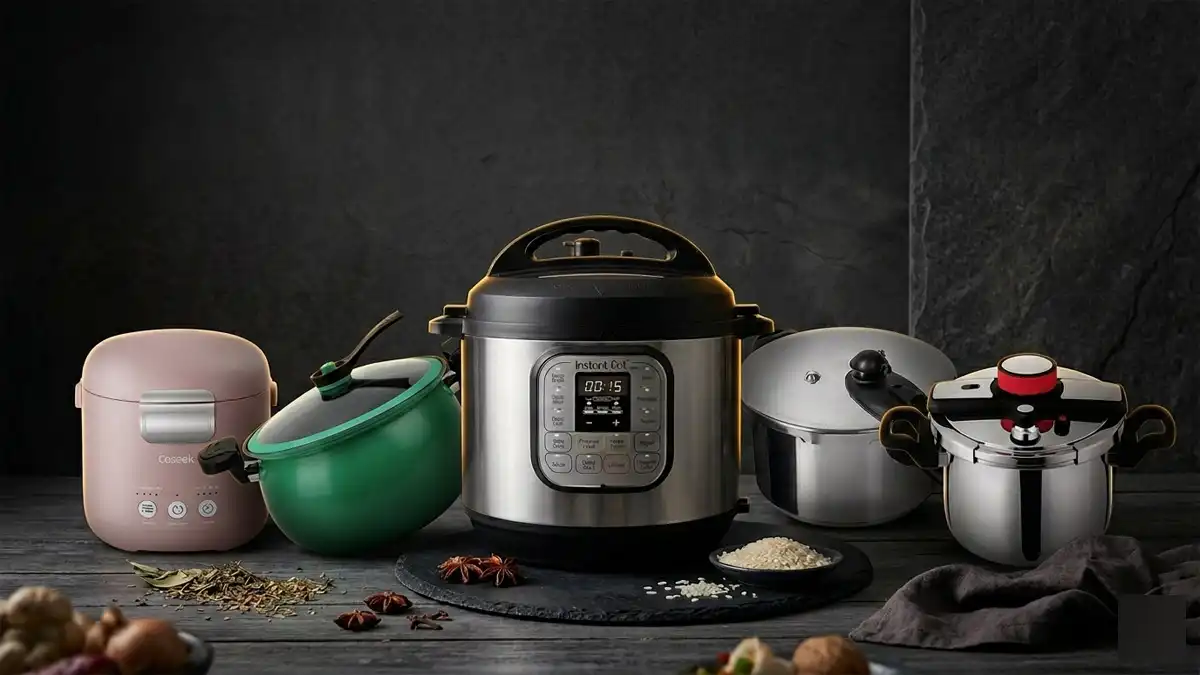
If you’ve ever stood in the kitchen wondering why one pot can finish dinner in 15 minutes while another takes all day, you’ve already bumped into the great cooking divide: pressure cooking versus slow cooking. Both methods turn raw ingredients into tender, satisfying meals—but they take radically different paths to get there. One races ahead on steam power; the other takes the scenic route. This guide explores the real, practical differences so you can master both (or pick the one that fits your life).
Quick Answer: Pressure cooking uses trapped steam to cook food quickly at high heat, while slow cooking uses low, steady heat to gently simmer food over many hours. The choice depends on how much time you have, the textures you love, and your cooking routine.
What Is Pressure Cooking?
Pressure cooking is all about steam power. A sealed pot traps steam produced by a small amount of boiling liquid. As pressure builds, the boiling point of water rises—up to around 250°F (121°C)—far higher than the standard 212°F. This superheated steam rapidly transfers heat into food, drastically cutting cooking time.
- A dish that normally simmers for hours can be done in under 30 minutes.
- It’s ideal for dried beans, tough cuts of meat, whole grains, and quick one-pot meals.
- Modern electric pressure cookers (like the Instant Pot) have made the process safer and more user-friendly than old stovetop models.
Pressure cooking has become a global kitchen staple—especially in countries like India where the familiar whistle of a stovetop cooker means dal or rice is almost ready.
What Is Slow Cooking?
Slow cooking is the polar opposite. A slow cooker heats food to a steady 190–250°F and holds it there for 4 to 10 hours, using a tight lid to lock in moisture. Because the temperature is so low and constant, connective tissues in meat break down gradually, and flavors meld together deeply.
- It’s the ultimate “set it and forget it” tool. You prep in the morning and return to a finished meal.
- Tough, budget-friendly cuts become fall-apart tender.
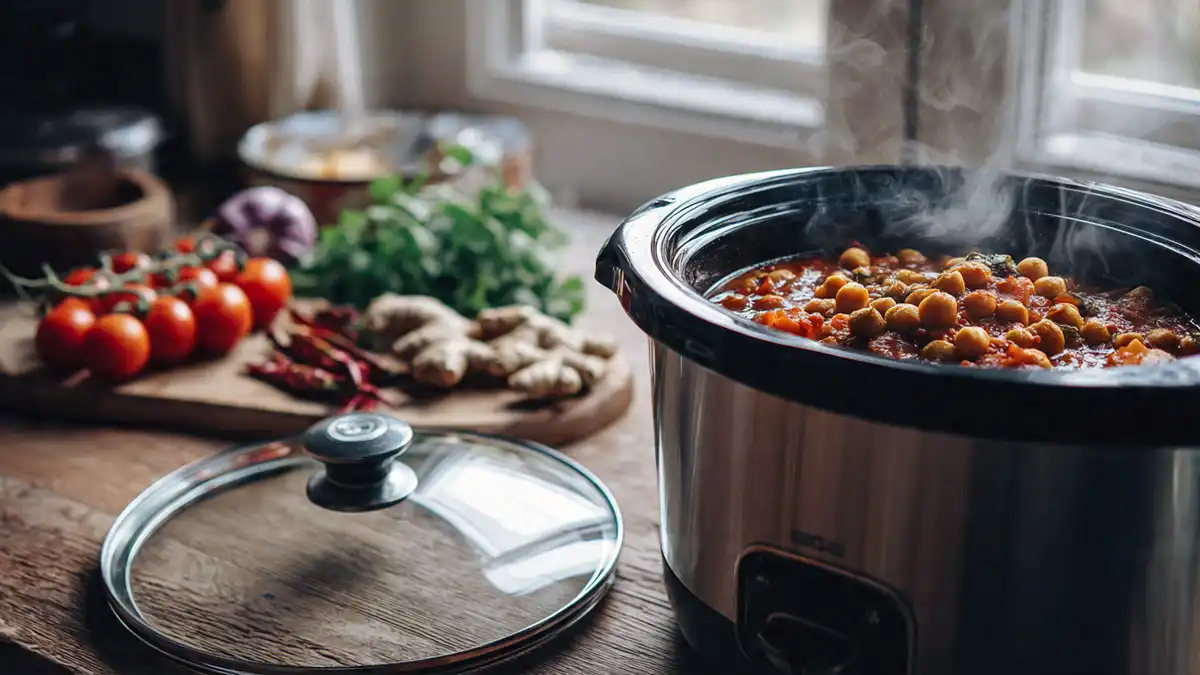
- Curries, stews, broths, and dals achieve a round, comforting depth that fast cooking rarely matches.
For a complete breakdown of the appliance, see our pillar guide: What Is a Slow Cooker and How Does It Work?
⚡ Quick Comparison at a Glance
| Difference | Pressure Cooking | Slow Cooking |
|---|---|---|
| Cooking Speed | Very fast (10–40 mins typical) | Very slow (4–10+ hours) |
| Flavor Result | Bright, distinct ingredient flavors | Deep, melded, mellow flavors |
| Liquid Needed | At least 1 cup for steam | Minimal; ingredients release moisture |
| Energy Use | Short burst of high energy | Low wattage used over long periods |
| Attention Required | Monitoring during pressurization, then hands-off | Almost zero attention; fully unattended |
| Meal Planning | Last-minute meals possible | Requires morning or overnight planning |
| Texture | Tender but firm, vegetables keep shape | Ultra-soft, stew-like, some veg can go mushy |
Pressure Cooking vs Slow Cooking: Core Differences
The table above gives you the bird’s-eye view. Now let’s zoom in on what these differences mean in everyday cooking.
- Cooking speed: Pressure cookers slash cooking time by up to 70%. A beef stew that takes 8 hours in a slow cooker is ready in 35 minutes. Slow cookers are deliberately slow—they’re designed for all-day unattended cooking.
- Flavor and texture: Pressure cooking locks in volatile aromatics, so garlic, ginger, and tomatoes taste vivid. Slow cooking mellows everything into a unified, deeply savory whole.
- Water usage: Pressure cookers must have a minimum amount of thin liquid to build steam. Slow cookers require far less added liquid because the sealed lid prevents evaporation. Too much water in a slow cooker? That’s exactly why we wrote Why Slow Cooker Food Turns Watery
- Energy consumption: (See the full breakdown in the energy section below.)
- Attention needed: A pressure cooker needs a few minutes of monitoring during pressurization, then it’s hands-off. A slow cooker demands almost zero attention from start to finish.
- Meal preparation style: Pressure cookers suit last-minute cooks and busy weeknights. Slow cookers reward planners and meal-preppers.
This fundamental trade-off between time and depth is what usually decides which tool comes out of your cabinet.
Which Foods Work Better in a Pressure Cooker?
A pressure cooker saves the day when you need speed without sacrificing tenderness. It’s particularly brilliant for:
- Rice and grains: White rice in 5 minutes, brown rice in 20, quinoa in 1 minute under pressure.
- Dried beans and lentils: No overnight soaking required—chickpeas, kidney beans, and black beans are ready within 30–45 minutes.
- Tough meat cuts: Beef stew meat, lamb, or pork ribs turn tender in 25–35 minutes instead of hours.
- Quick one-pot dinners: A full chicken curry, sambar, or pasta dish can materialize in under 15 minutes of cooking.
Note: Because pressure cooking uses high heat, delicate vegetables can overcook quickly. Layering ingredients and using precise timing is key.
Which Foods Work Better in a Slow Cooker?
A slow cooker wins when you want deep, slow-developed flavor and a set-it-and-forget-it meal.
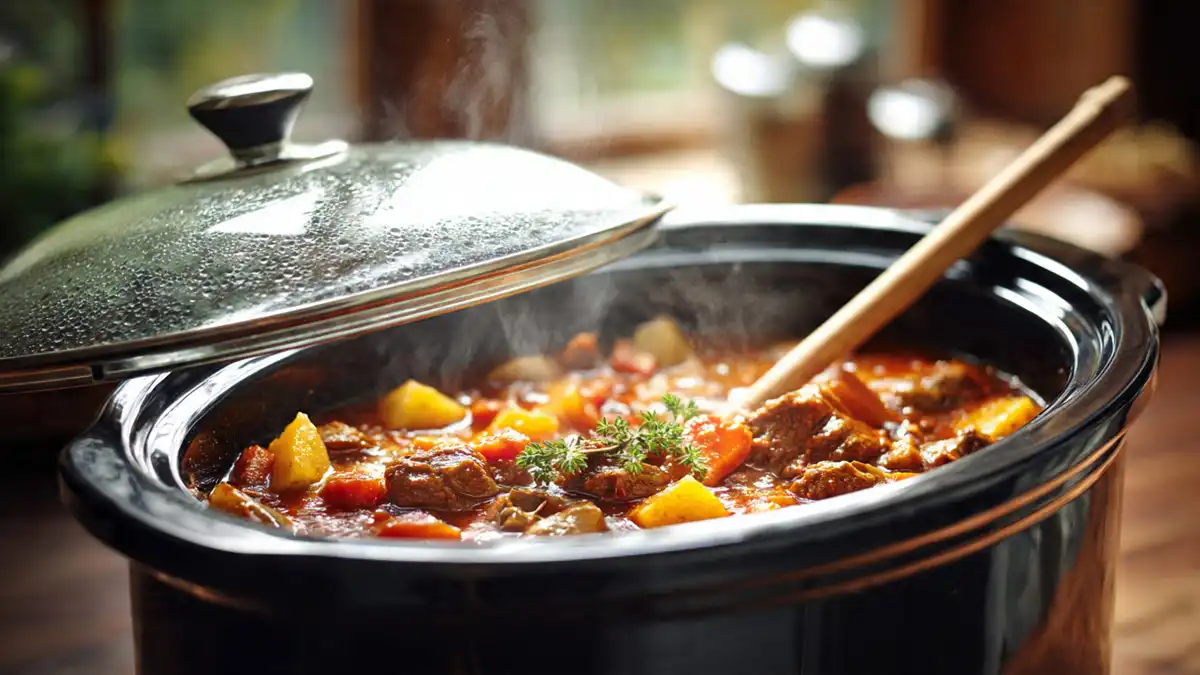
- Hearty stews and curries: Slow cooking gives spices, herbs, and aromatics time to fully develop. Dishes like beef stew, chili, and lentil soup become richer, deeper, and more comforting after hours of gentle heat.
- Soups and bone broths: The long simmer extracts gelatin and minerals, yielding a full-bodied broth.
- Pulled meats: Pork shoulder, pot roast, and chicken thighs shred effortlessly after 8 hours on LOW.
- Overnight recipes: Prepare a breakfast casserole or overnight oats; you’ll wake up to a ready-to-eat meal.
As a general rule, if the dish needs to develop a deep, cohesive flavor and you have time to spare, slow cooking is the superior method.
👉 Explore more ingredient-based slow cooker recipes, soups, stews, and comforting one-pot meals on AllRecipesbyIngredients.com.
Why Slow Cooking Is Popular in the US, UK & Australia
In Western countries, the slow cooker has earned its spot through changing lifestyles and meal prep culture.
- Busy work schedules: With long commutes and 9-to-5 routines, coming home to a ready meal is a huge quality-of-life upgrade. Slow cookers make that possible.
- Meal prep movement: Batch cooking on weekends and freezing portions is a dominant food trend. A large slow cooker can produce a week’s worth of chili, soup, or pulled chicken with minimal effort.
- Convenience-first cooking: Many Americans and Australians value appliances that reduce daily kitchen workload, and the slow cooker delivers with virtually no learning curve.
- Comfort food culture: Pot roasts, stews, and casseroles are staples of home cooking. Slow cooking makes these dishes exceptionally tender and flavorful.
Interestingly, many Western kitchens are now adopting electric pressure cookers for their versatility, often keeping both appliances on hand.
Why Pressure Cooking Is Popular in India
In many Indian kitchens, the pressure cooker isn’t a specialty gadget—it’s the everyday workhorse. The sound of its whistle is the background rhythm of millions of homes.
- Daily dal and rice: The backbone of Indian meals relies on fast, predictable cooking. Rice and dal can cook simultaneously in a single pressure cooker using a divider.
- Whistle system: Stovetop pressure cookers use a weight that releases steam in controlled “whistles.” Recipes are written in whistle counts (e.g., “cook for 3 whistles”), making timing intuitive.
- Fuel economy: Gas is a daily expense; faster cooking means significant fuel savings over time.
Pressure cooking is so deeply embedded in Indian culinary culture that most cooks master it before any other technique.
Which One Uses More Electricity or Gas?
Energy consumption often surprises people. Here’s a clear, bite-sized look.
Electric slow cooker: Very energy-efficient. A standard model uses 100–250 watts, similar to a bright light bulb. Over 8 hours, that’s about 1.5–2 kWh. That’s roughly the same as running a desktop computer for a day. Cost per meal is extremely low.
Electric pressure cooker: Uses more wattage (700–1200W) but for a much shorter time. An Instant Pot cooking beans for 30 minutes consumes around 0.35 kWh. That’s often even less total electricity than the slow cooker for the same dish.
Stovetop pressure cooker (gas): Saves gas compared to an open simmer for hours. The advantage depends on flame size and cookware. Very efficient for short cooking times.
Bottom line: Both methods are economical. An electric pressure cooker often edges out the slow cooker in total energy use per dish. However, the difference is negligible for most households.
Which One Is Better for Beginners?
This depends entirely on the type of beginner you are.
Pressure cooker: Modern electric models have safety sensors, foolproof lids, and preset programs. You can toss ingredients in and press “beans” or “rice.” Understanding natural release vs. quick release and minimum liquid requirements takes a small learning curve. For a complete newbie, it can feel slightly technical at first press.
Slow cooker: Almost no learning curve. Throw ingredients in, turn one knob, and ignore it. It’s extremely forgiving—even if your chopping is uneven or your spice measurement is off, the dish usually comes out fine. This makes it the kinder starting point for apprehensive cooks.
If you’re considering your first countertop appliance, a slow cooker offers the gentlest entry. If you’re ready to embrace speed and are willing to learn two or three key rules, an electric pressure cooker can quickly become indispensable.
Can You Replace One With the Other?
You can sometimes substitute, but you’ll often lose something in translation.
- Soups, stews, curries, and dals can be made in both. A pressure cooker will yield a fresher-tasting result; a slow cooker will give you a more melded, cozy bowl.
- Rice and quick-cooking grains? Almost always better in a pressure cooker. They can turn mushy in a slow cooker.
- Tough meats? Both work. A pressure cooker does it in 35 minutes; a slow cooker takes all day and produces a silkier pull-apart texture.
- Crispy or roasted elements? Neither can do it. Both are moist-heat environments.
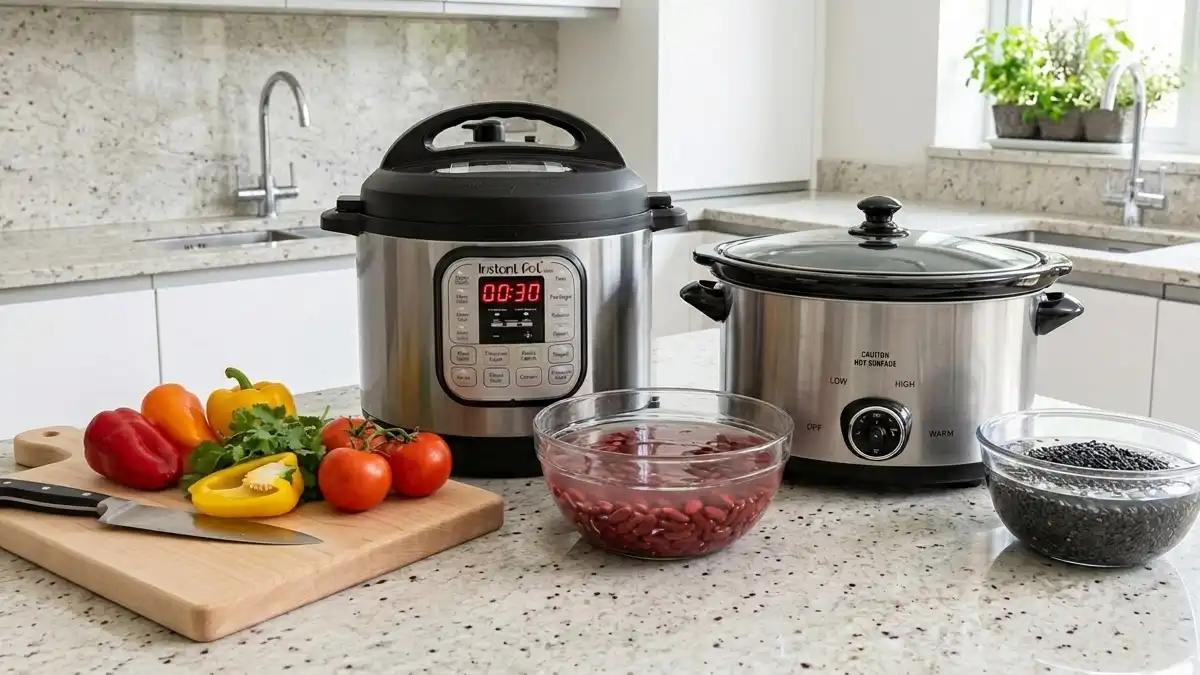
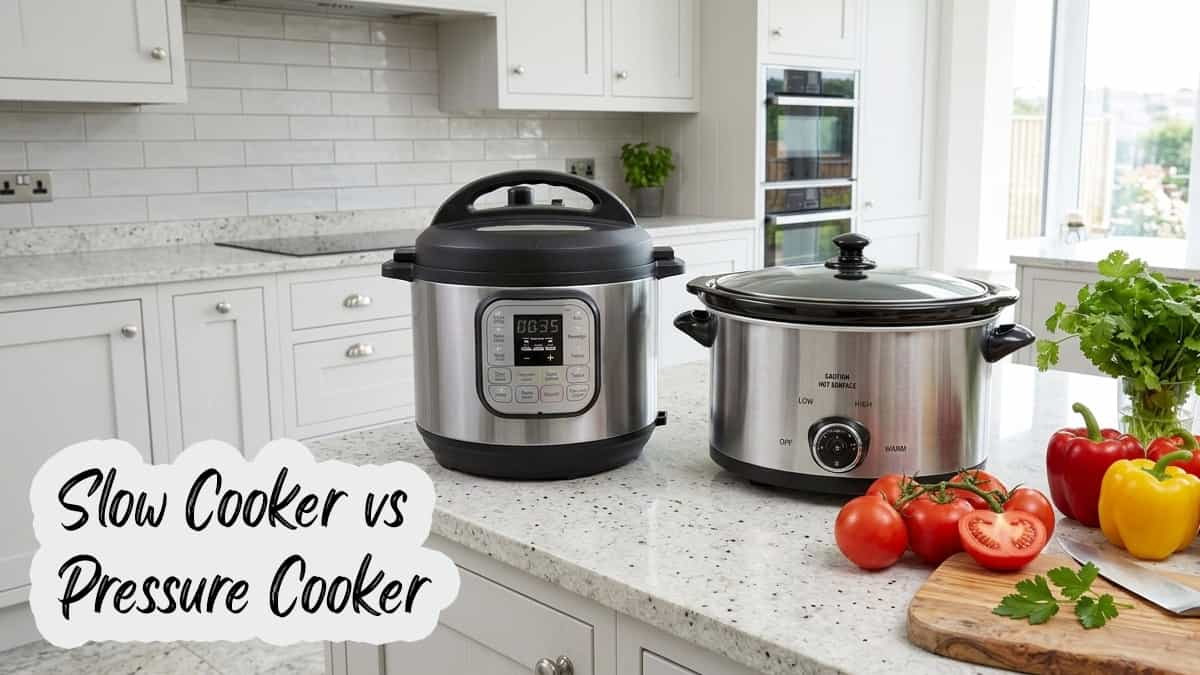
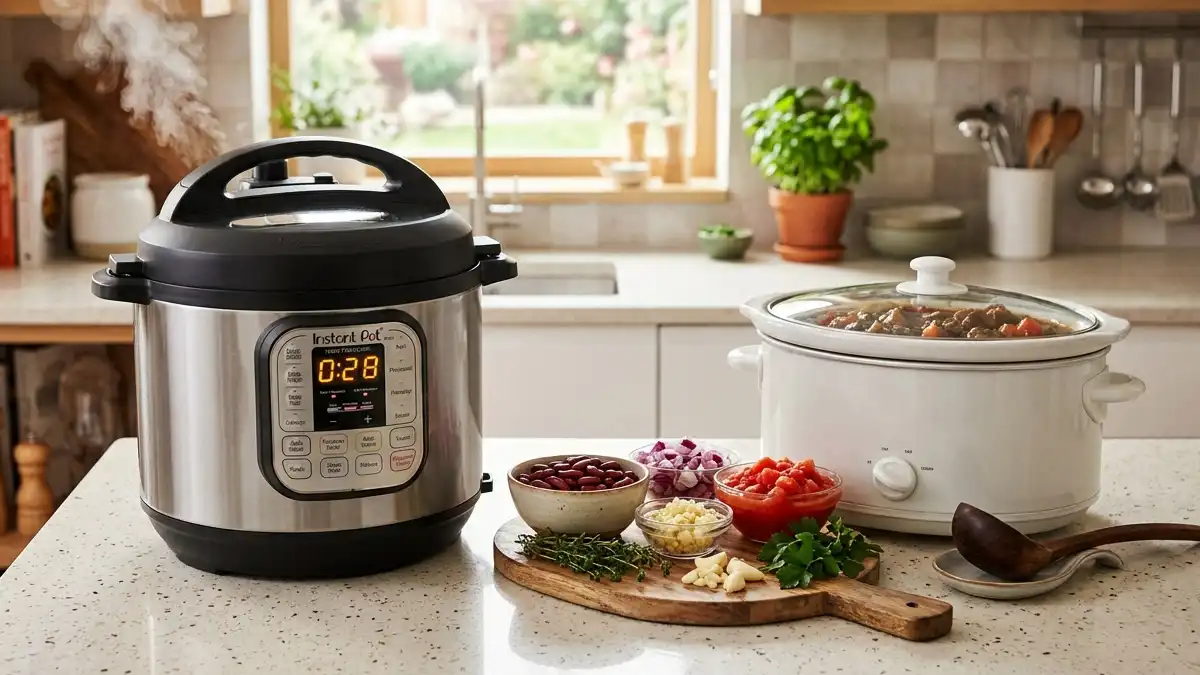
The truth is that many cooking enthusiasts eventually keep both: a slow cooker for all-day stews and a pressure cooker for lightning-fast beans and grains. For a focused comparison of these appliances, see our dedicated guide: Slow Cooker vs Pressure Cooker
Final Verdict
There is no universal winner between pressure cooking and slow cooking. The real choice is personal:
- If your life is fast, unpredictable, and you want home-cooked meals with minimal planning, pressure cooking will serve you better.
- If you plan ahead, love the ritual of filling your home with the aroma of a long-simmering dinner, and prefer deeply comforting textures, slow cooking is your ally.
- Most importantly, know that both methods can happily coexist in one kitchen—each saving the day on different kinds of days.
Frequently Asked Questions
Can I slow cook in a pressure cooker?
Yes, many electric pressure cookers include a slow cook function. However, heating comes only from the bottom, so it isn’t identical to a dedicated ceramic slow cooker. Results can be slightly uneven; it works but isn’t always a perfect replacement.
Is pressure cooking healthier than slow cooking?
Both are healthy methods. Pressure cooking may retain more water-soluble vitamins due to shorter cooking time. Slow cooking can extract minerals into broth. Neither requires added fat.
Does food taste different in a pressure cooker versus a slow cooker?
Yes. Pressure cooking preserves brighter, more distinct flavor notes. Slow cooking blends and mellows flavors over time. You might prefer one or the other depending on the dish.
Do I need to adjust liquid for pressure cooking?
Absolutely. Pressure cookers require a minimum amount of thin liquid (about 1 cup) to generate steam. For slow cookers, you often need less liquid than stovetop recipes because very little evaporates. For more on that, read: Why Slow Cooker Food Turns Watery
Can I leave a pressure cooker unattended like a slow cooker?
Electric pressure cookers are safe to leave once the cooking cycle starts, but they finish quickly. Slow cookers are specifically built to be unattended for 8+ hours. Stovetop pressure cookers should not be left alone for safety reasons.
Which method do you use more—fast pressure or slow simmer? Tell us your go-to dish in the comments!
🔗 Explore more cooking guides from CookedPan:
- What Is a Slow Cooker and How Does It Work?
- Slow Cooker vs Pressure Cooker: Which Should You Use?
- Is a Slow Cooker Worth It?
- Pressure Cookers Around the World: Types
- Why Slow Cooker Food Turns Watery