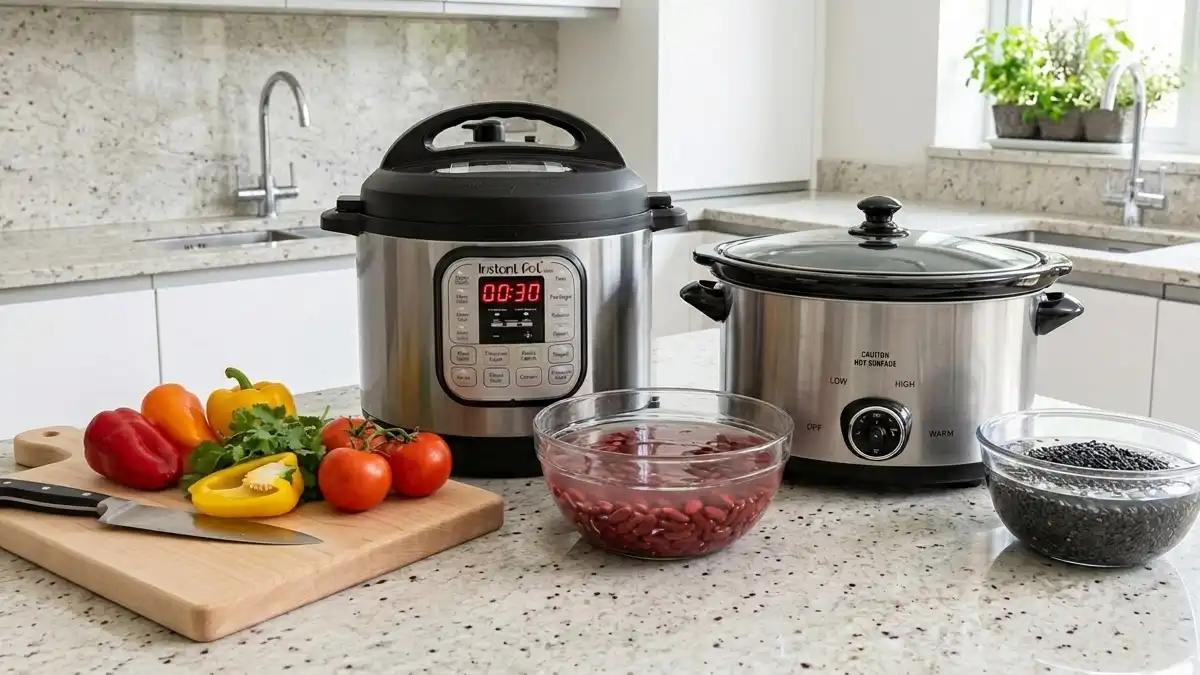
Both the Crock-Pot and the Instant Pot can make soups, stews, shredded meat, beans, and comfort food — but they cook very differently. One uses slow, gentle heat over several hours. The other uses pressure to cook food fast.
So which one actually works better for different foods?
The answer depends on flavor, texture, cooking time, and the kind of meal you want. Some dishes become richer and deeper in a slow cooker, while others turn out faster and more convenient in a pressure cooker.
Quick Answer: A Crock-Pot (slow cooker) excels at developing deep, melded flavors over many hours, perfect for stews, chili, and tough meats. An Instant Pot (pressure cooker) wins on speed, retaining bright flavors and making quick work of beans, grains, and last-minute meals. The best choice depends on which food you’re cooking and your schedule.
What’s the Difference Between a Crock-Pot and an Instant Pot?
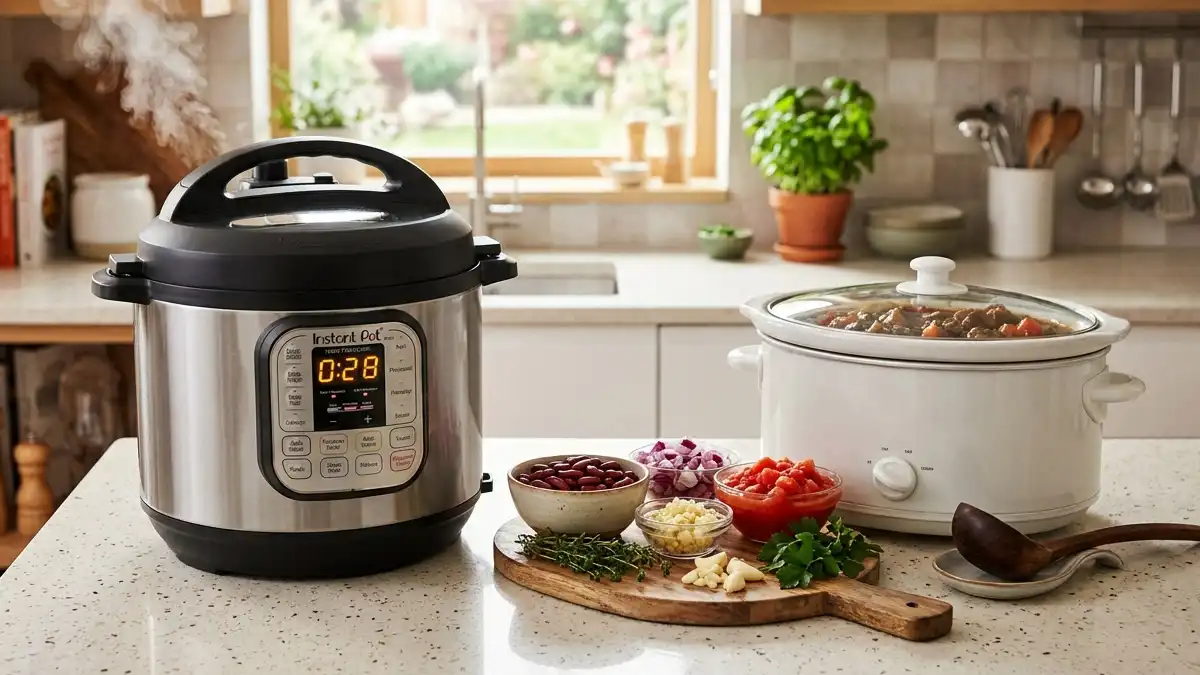
- Crock-Pot is the most famous brand of slow cookers. It cooks food gently at low temperatures — typically around 190–200°F (88–93°C) on LOW and up to 300°F (149°C) on HIGH — over 4–10 hours. It’s designed to be left unattended all day.
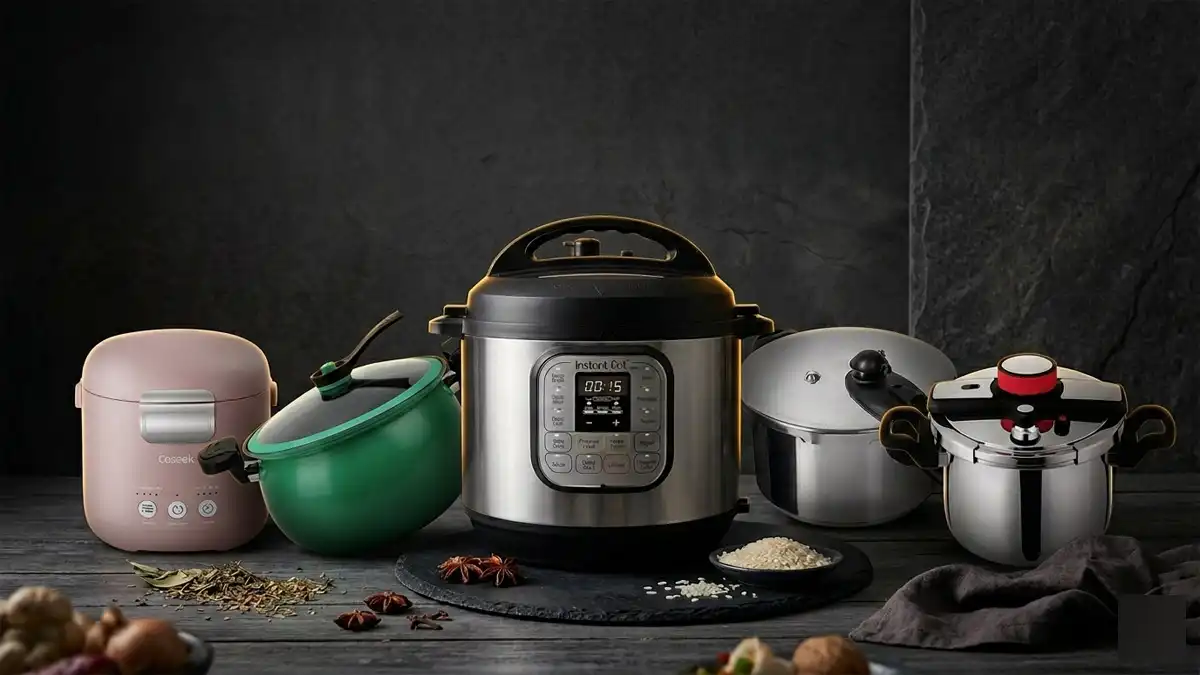
- Instant Pot is the leading brand of electric pressure cookers. It uses high-pressure steam that can reach approximately 250°F (121°C) inside, cooking food in a fraction of the time — often 30 minutes or less.
While an Instant Pot usually has a “slow cook” function, its primary magic comes from pressure. For a detailed look at the slow cooker itself, read: What Is a Slow Cooker and How Does It Work?
Slow Cooking vs Pressure Cooking: Flavor Differences
This is the biggest flavor difference nobody talks about:
- Slow cooking allows flavors to blend and mellow. Spices fully marry, and the dish tastes round, comforting, and deeply savory. Over hours, even cheap cuts of meat release gelatin, creating a rich mouthfeel.
- Pressure cooking traps volatile aromatics quickly. It preserves sharper, more distinct notes — garlic hits harder, tomatoes stay tangy, ginger pops. The result is fresher-tasting, but the flavors don’t have time to meld into one seamless “whole.”
Neither is better; it’s about the kind of eating experience you want tonight.
Which Is Better for Busy Weeknights?
- Instant Pot wins. It can cook dried beans in 30 minutes, rice in 5, and a full chicken curry in 15. If you haven’t prepped anything, the Instant Pot saves dinner.
- Crock-Pot requires morning planning. If you’re out of the house for 8+ hours, it delivers a ready meal when you walk in. But it won’t help you at 5 PM if you forgot to load it.
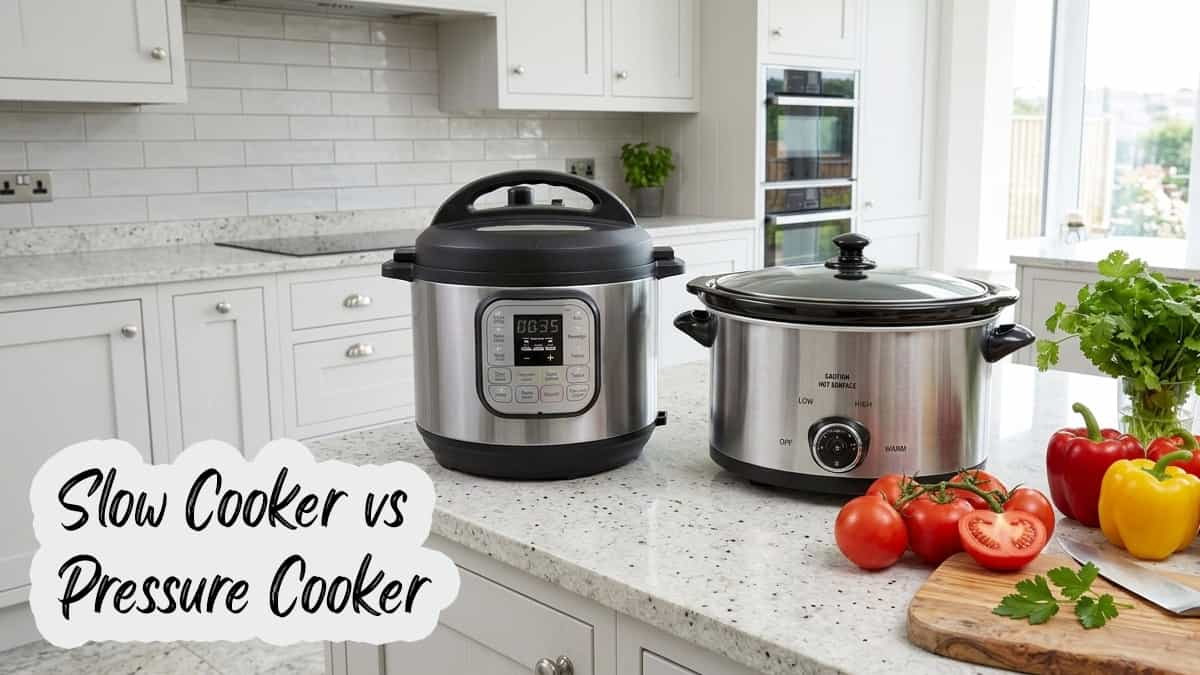
If you often find yourself scrambling last minute, the comparison in Slow Cooker vs Pressure Cooker might help you choose.
Which Makes Better Soups and Stews?
- Soups: Both produce excellent soups. Instant Pot versions taste brighter; Crock-Pot soups feel silkier and more cohesive. For clear broths, both work well.
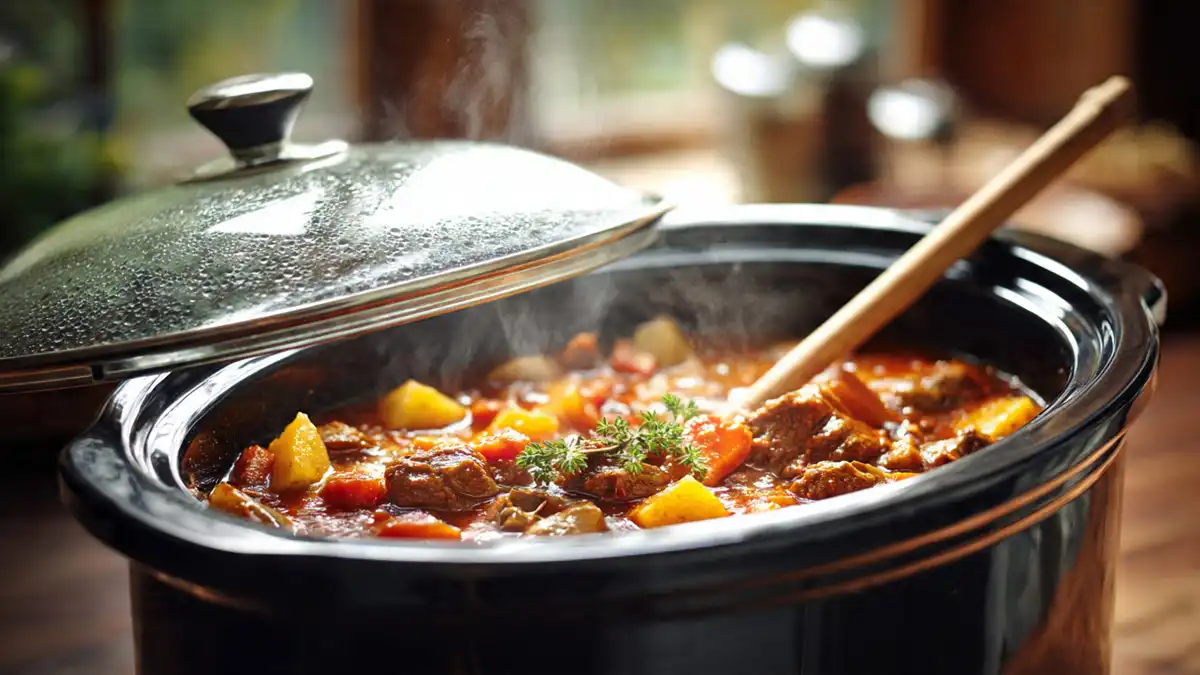
- Stews: Crock-Pot is the champion. The prolonged low heat breaks down connective tissue and melds flavors into a thick, rich consistency. An Instant Pot makes a great stew, but it lacks that all-day simmered depth.
Best for Chili and Bean Dishes
Chili is one of those dishes where the slow cooker truly shines. The long simmer allows spices to penetrate every bean and chunk of meat.
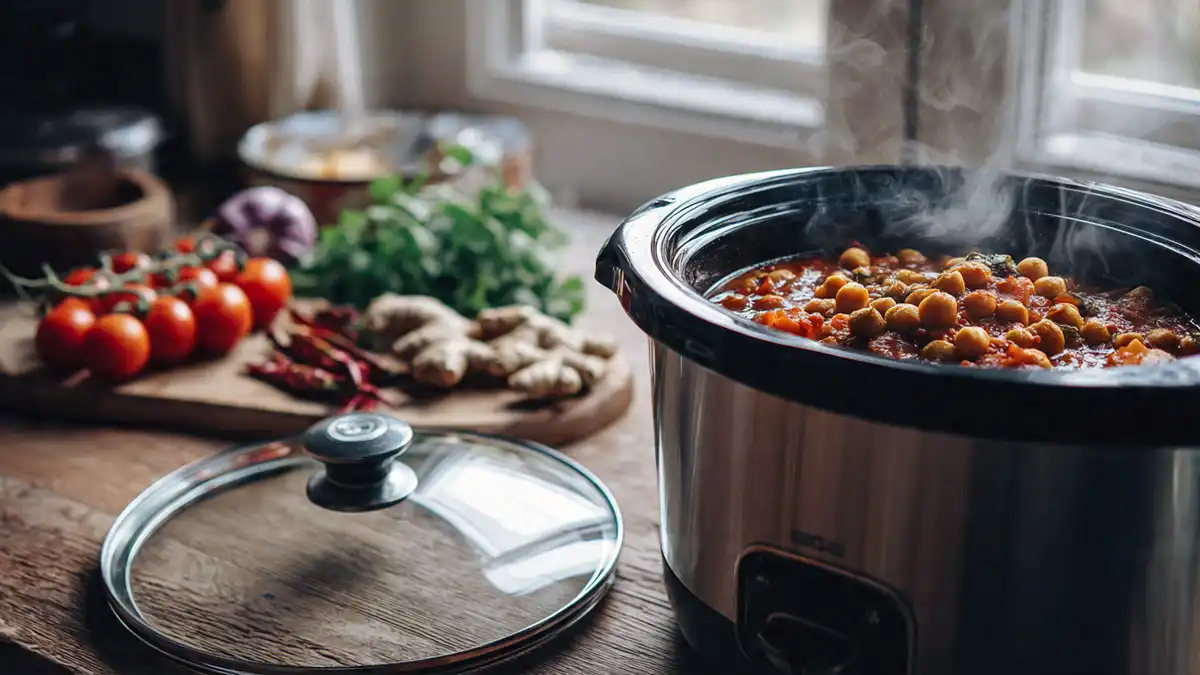
Why slow cooker chili often tastes better the next day: After sitting overnight in the fridge, the flavors continue to meld. This makes Crock-Pot chili a brilliant make-ahead meal. Instant Pot chili is delicious and fast, but the complexity doesn’t develop as deeply.
- Crock-Pot: Ideal for classic chili, bean-heavy recipes, and overnight flavor development.
- Instant Pot: Perfect if you need chili in under an hour with no pre-soaked beans.
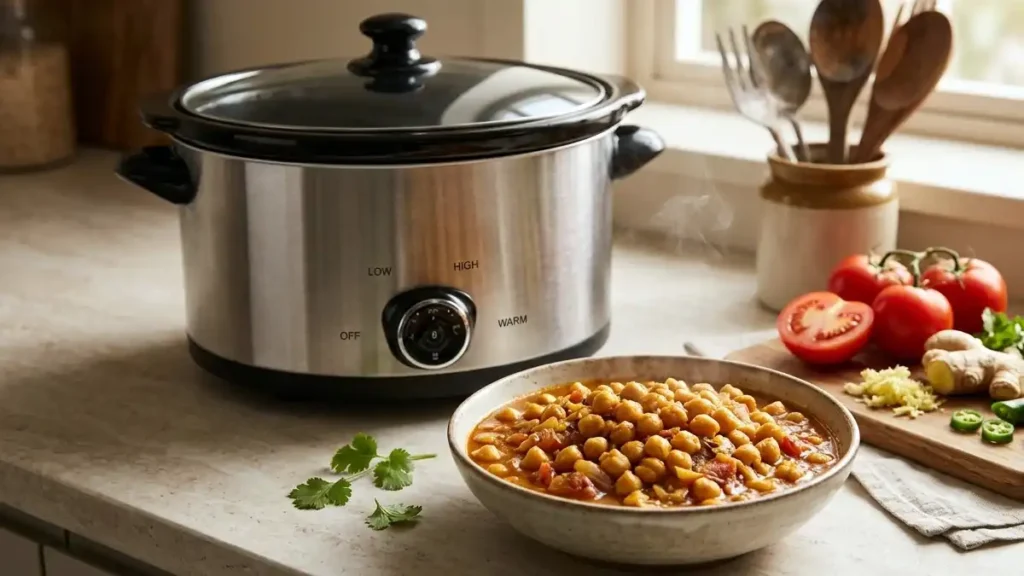
Which Works Better for Rice and Grains?
- Instant Pot is the clear winner. Rice cooks evenly in minutes. Brown rice, quinoa, and barley come out perfectly tender.
- Crock-Pot can cook rice dishes like biryani or rice pudding, but timing is finicky, and plain rice can turn mushy or uneven.
Pulled Pork, Pot Roast & Shredded Chicken Comparison
Both appliances can turn tough cuts into pull-apart meat. But the texture differs:
- Crock-Pot: 8 hours on LOW gives pork shoulder or chuck roast an almost buttery softness. Fibers separate effortlessly, and the meat practically melts.
- Instant Pot: 45–60 minutes under pressure yields tender, shreddable meat, but it’s slightly firmer and the strands hold more shape.
For pure luxurious tenderness, Crock-Pot wins. For speed with still-excellent results, Instant Pot is perfect.
Which Appliance Handles Tough Cuts of Meat Better?
Both do, but the Crock-Pot’s gentler, longer heat breaks down collagen more completely. In an Instant Pot, tough cuts become tender quickly, but they can become dry if overcooked even slightly. The Crock-Pot is more forgiving.
Better for Meal Prep and Batch Cooking?
- Crock-Pot: Great for large batches of chili, stew, or pulled meat. You can leave it unattended. It’s ideal for “cook once, eat all week.”
- Instant Pot: Excellent for batch cooking beans, grains, and quick proteins. You can cook multiple items sequentially (e.g., rice and curry) in a short window.
Many meal preppers eventually own both — one for overnight slow cooks, one for quick grains and beans.
Which Is Easier for Beginners?
- Crock-Pot: Almost zero learning curve. Dump ingredients in, turn the dial, and walk away. It’s incredibly forgiving.
- Instant Pot: Electric multicookers are beginner-friendly but come with a few essential rules: minimum liquid, proper sealing, and pressure release methods. Once you learn those, it’s easy.
For an absolute beginner who’s nervous about kitchen gadgets, the Crock-Pot feels more approachable.
Which One Uses Less Electricity?
- Crock-Pot: Uses 100–250 watts over many hours. Total energy cost is low, similar to leaving a bright bulb on all day.
- Instant Pot: Uses 700–1200 watts but for a much shorter time. A 30-minute pressure-cooked meal often uses less total electricity than an 8-hour slow cook.
Over a year, the difference is negligible. Both are energy-efficient compared to an oven.
Slow Cooker vs Instant Pot for Vegetables
Why some vegetables turn mushy in an Instant Pot: The high-pressure environment can quickly destroy delicate cell walls. Zucchini, spinach, and peas can become mush in minutes. Potatoes and carrots fare well.
- Crock-Pot: Root vegetables like carrots, potatoes, and onions soften beautifully over hours. Delicate vegetables can be added near the end.
- Instant Pot: Excellent for hard vegetables (beets, potatoes, artichokes) in record time. Delicate veg should be cooked “zero minute” or added after pressure cooking.
Which Is Better for Lentils and Beans?
- Instant Pot: Dried chickpeas, kidney beans, and black beans are done in 30–45 minutes, no soaking required. It’s a game-changer for bean lovers.
- Crock-Pot: Can cook pre-soaked beans all day, but some dried beans (like red kidney beans) need boiling to neutralize toxins; slow cookers may not reach high enough temperatures. For safety, pre-boil them first.
For convenience and safety, Instant Pot is the champion here. Read about the watery food issue if you use too much liquid in a slow cooker: Why Slow Cooker Food Turns Watery
Texture Differences: Tender vs Fast-Cooked
The texture difference between 8 hours LOW vs 45 minutes pressure cooked is real:
- Crock-Pot: Meat proteins relax slowly. The result is a silky, shredable texture that feels luxurious. Vegetables are soft but not disintegrated if timed right.
- Instant Pot: Meat is firm-tender and holds structure. It’s excellent for cubed meat in stews, but it won’t fall apart quite the same way as a slow-cooked roast.
Which Makes Better Broth and Stock?
Slow cookers are the traditional winner for bone broth. The long, gentle extraction pulls gelatin and minerals over 10–24 hours. An Instant Pot can make excellent stock quickly (2–3 hours), producing a clean, rich broth, though purists might argue it lacks the subtle complexity of an all-day simmer.
Can an Instant Pot Replace a Crock-Pot?
In theory, yes — the Instant Pot has a slow cook function. In practice, many users find it falls short. Its heating element is on the bottom rather than wrapping around the sides, leading to uneven slow cooking. A dedicated Crock-Pot still delivers better low-and-slow results. So if slow cooking is a major part of your routine, you may still want the separate appliance.
Foods That Taste Better in a Slow Cooker
- Beef stew and pot roast
- Pulled pork and shredded chicken
- Chili (especially next-day flavor)
- Bone broth
- Overnight oatmeal
- Curries that need all-day spice melding
Foods That Work Better in an Instant Pot
- Rice and grains
- Dried beans and lentils (without soaking)
- Steamed vegetables (hard types)
- Quick soups and weeknight curries
- Cheesecakes and steamed puddings
- Yogurt (with the yogurt function)
Cleaning and Maintenance Comparison
Both are easy to clean. Crock-Pot’s stoneware is often dishwasher-safe. Instant Pot’s stainless steel inner pot is also dishwasher-safe but needs careful cleaning of the lid’s sealing ring and valves. The Instant Pot has more parts to maintain.
Which Appliance Is Better for Small Kitchens?
If you can only keep one, the Instant Pot is more versatile — pressure cooker, slow cooker, rice cooker, steamer, yogurt maker. It saves counter space by replacing multiple gadgets. A Crock-Pot does one thing beautifully, but it’s a single-tasker.
Which One Is Better for Families?
Both work well. A large Crock-Pot can handle 6–8 quarts, feeding a crowd with ease. An Instant Pot of similar size can feed a family quickly but sometimes requires strategic batch cooking for very large groups.
Common Mistakes People Make With Both
- Crock-Pot: Adding too much liquid (no evaporation), lifting the lid too often, not browning meat first for flavor, adding dairy too early.
- Instant Pot: Not adding enough liquid to reach pressure, overfilling the pot, forgetting to seal the valve, quick-releasing for foamy foods causing splatter.
Extra Insights & Flavor Secrets
Why Restaurants Still Use Slow Cooking
Professional kitchens often use slow cookers or low-temperature ovens to develop flavor over hours — something a quick burst of pressure can’t fully replicate for signature braised dishes.
Can You Really “Set It and Forget It” With an Instant Pot?
Yes, but only after it comes to pressure. You still need a few minutes of attention to start the cycle, and you can’t leave it unattended for the entire day like a slow cooker.
Which Appliance Makes Food Smell Better While Cooking? 😂
Crock-Pot, hands down. The aroma of a simmering stew fills the house over hours. The Instant Pot seals everything in — you don’t get that intoxicating scent until you release the steam.
Why Some People Own Both Appliances
Each fills a different gap. Slow cooker for planned, all-day comfort cooking; Instant Pot for lightning-fast meals, rice, and beans. Together, they cover nearly every cooking scenario.
Which One Feels More Like Traditional Home Cooking?
The Crock-Pot evokes nostalgia and the feeling of a meal that’s been simmering lovingly all day. The Instant Pot feels modern and efficient but lacks the slow-simmered soul.
Final Verdict: Which One Fits Your Cooking Style?
- Choose a Crock-Pot (slow cooker) if you love deep, comforting stews, cook pulled meats regularly, or want a meal ready when you walk in the door after a long day.
- Choose an Instant Pot (pressure cooker) if speed, versatility, and cooking beans or grains fast matters most — or if you have limited counter space.
- Already own one? Many cooks eventually add the other. They complement each other exceptionally well.
FAQs
Can I make yogurt in a Crock-Pot?
Some slow cookers can maintain a low enough temperature for yogurt, but an Instant Pot has a dedicated yogurt program that makes it much easier and more reliable.
Does food burn in an Instant Pot?
It can if there’s not enough liquid or if starchy foods settle at the bottom. Always deglaze the pot after sautéing and use the minimum recommended liquid.
Is a Crock-Pot safe to leave on overnight?
Yes. Crock-Pot slow cookers are built to meet North American safety standards (look for UL certification) and are designed for safe unattended use. Place it on a heat-resistant surface away from cabinets and walls, and ensure the cord isn’t touching anything hot.
Does an Instant Pot destroy nutrients?
Not more than any other cooking method. In fact, shorter cooking times may preserve more heat-sensitive vitamins.
Which appliance is more affordable?
Basic Crock-Pot models are often cheaper than basic Instant Pots. However, the Instant Pot’s multi-function ability can save buying separate appliances.
Are you team Crock-Pot, team Instant Pot — or both? Tell us which appliance you reach for most in the comments!
🔗 Dive deeper into your kitchen decisions:
- What Is a Slow Cooker and How Does It Work?
- Slow Cooker vs Pressure Cooker: Which Should You Use?
- Is a Slow Cooker Worth It?
- Why Slow Cooker Food Turns Watery